
As the world races toward cleaner energy solutions, one term keeps rising to the forefront: green hydrogen. But what exactly is it, and why is it considered one of the most promising tools in the global transition to net-zero? This explainer breaks it down in a clear and simple way.
What Is Hydrogen?
Hydrogen is the most abundant element in the universe. It can be used as a clean fuel, producing only water vapor when it powers vehicles or generates electricity.
But not all hydrogen is created the same way — and that’s where the color system comes in.
What Makes Hydrogen “Green”?
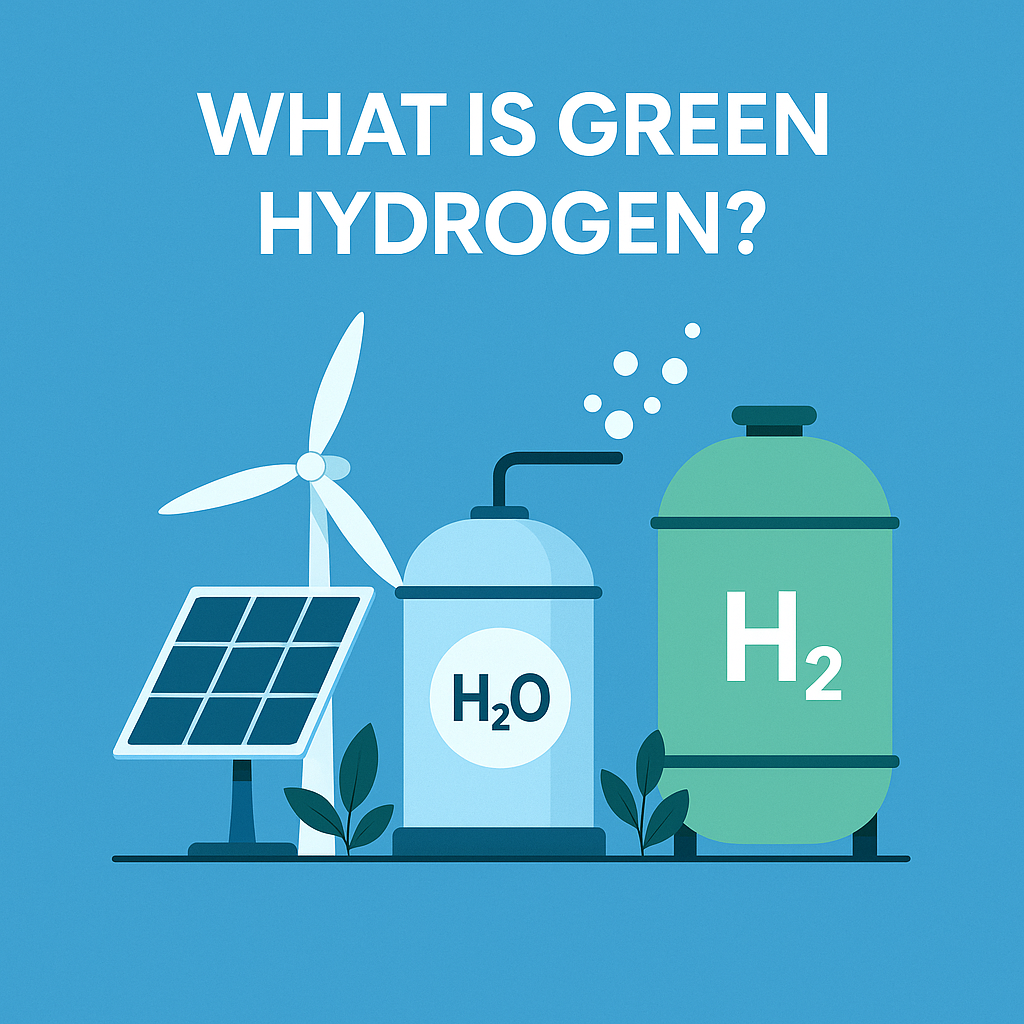
Hydrogen becomes green when it is produced using 100% renewable energy, such as:
- Solar power
- Wind power
- Hydropower
This renewable energy is used to split water (H₂O) into hydrogen and oxygen using a process called electrolysis.
The result?
Hydrogen made without any carbon emissions at all.
This makes green hydrogen the cleanest and most sustainable type of hydrogen available today.
Why Green Hydrogen Matters
Green hydrogen is attracting global attention because it can do things that other clean technologies can’t.
1. It Can Clean Up Heavy Industry
Industries like steel, cement, fertilizer, and chemicals are difficult to decarbonize. Green hydrogen can replace coal and natural gas in these processes, slashing emissions.
2. It Works as Long-Duration Energy Storage
Excess renewable power can be turned into hydrogen and stored for months — a huge advantage over batteries.
3. It Powers Zero-Emission Transport
Hydrogen fuel cells offer long range, fast refuelling, and zero emissions, making them ideal for:
- Trucks
- Buses
- Trains
- Ships
4. It Creates New Global Export Markets
Countries with abundant sunlight or wind can produce more hydrogen than they need, creating an entirely new clean-energy export industry.
How Is Green Hydrogen Produced?
Step 1: Renewable Energy Generation
Solar or wind farms generate electricity.
Step 2: Water Electrolysis
Electricity powers electrolyzer units, splitting water into hydrogen and oxygen.
Step 3: Hydrogen Storage & Use
The hydrogen can then be:
- Stored in tanks
- Transported by pipelines or ships
- Converted into electricity
- Used in industry or transportation
The entire chain remains carbon-free.
The Challenges Ahead
While green hydrogen is promising, there are still hurdles:
- Electrolyzers are still expensive
- Renewable energy supply must grow
- New infrastructure is needed
- Production must scale up globally
Despite these challenges, investment in green hydrogen is rising rapidly — and costs are expected to fall significantly over the next decade.
The Future of Green Hydrogen
Green hydrogen is more than a trend — it’s a critical pillar of the world’s clean-energy future. From powering zero-emission industries to supporting renewable grids, its potential is enormous.
At Green Hydrogen Global, we are dedicated to accelerating this transition through cutting-edge technology, engineering expertise, and large-scale clean hydrogen solutions.