
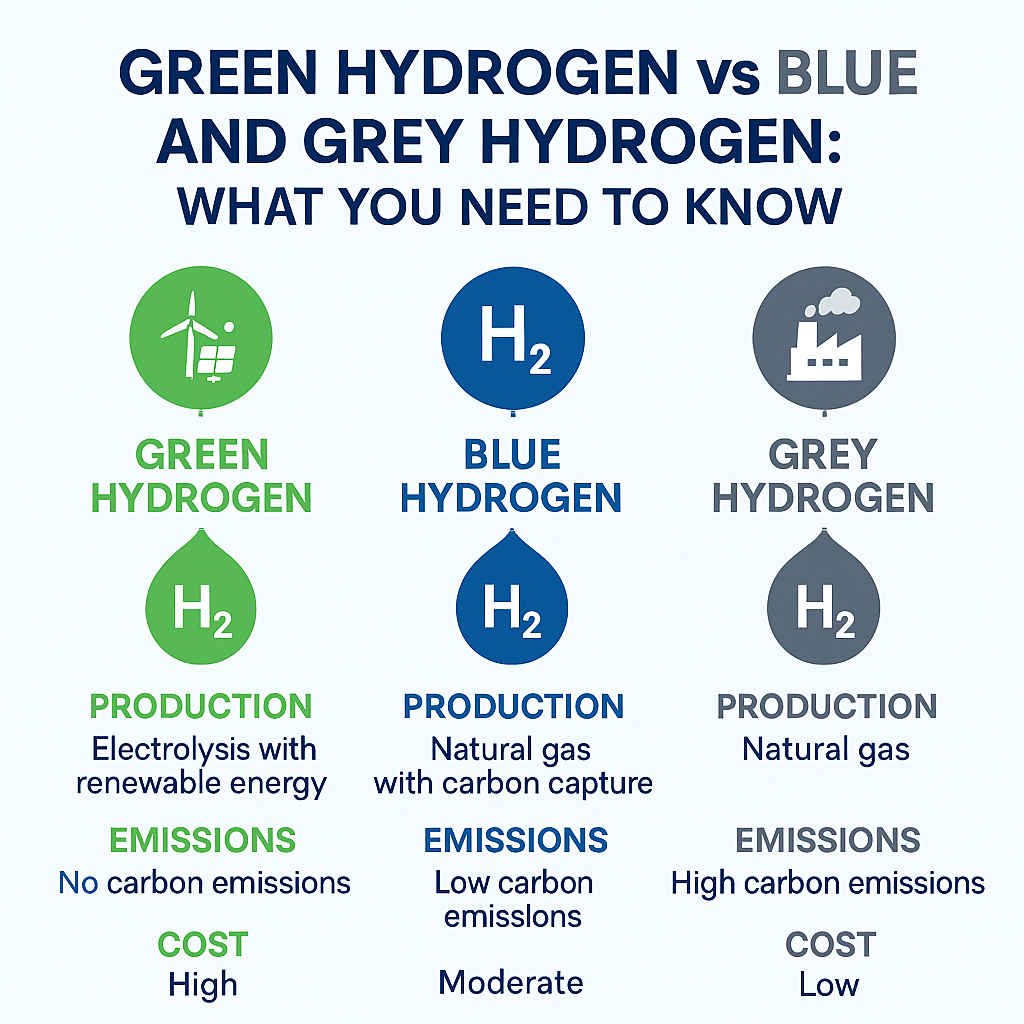
As the world shifts toward cleaner energy systems, understanding the types of hydrogen available today has become more important than ever. Hydrogen is often described using colours – not because the gas itself changes colour, but because the production method and environmental impact are different.
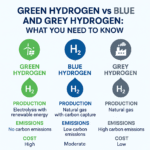
In this blog, we break down green hydrogen vs blue hydrogen vs grey hydrogen, helping you understand how each one is produced, how they affect emissions, and how they compare in cost.
Why Hydrogen Comes in Different “Colours”
The colour labels simply describe how hydrogen is made and its carbon footprint. While the end product is the same, the process behind it makes a big difference for sustainability, climate targets, and energy strategy.
Green Hydrogen
Production Method
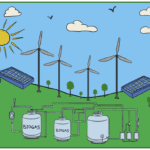
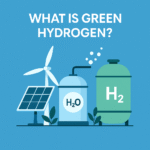
Green hydrogen is produced using renewable energy such as wind, solar or hydropower. These renewable sources power electrolysers that split water into hydrogen and oxygen.
Emissions
This method produces zero carbon emissions, making green hydrogen the cleanest type of hydrogen available.
Cost
Green hydrogen currently has higher production costs, mainly due to the price of renewable energy systems and electrolyser technology. However, costs are falling as global adoption grows.
Blue Hydrogen
Production Method
Blue hydrogen is produced from natural gas, but with carbon capture technology. This means some of the emissions released during production are captured and stored underground.
Emissions
Emissions are lower than grey hydrogen, but not zero, because carbon capture systems are not 100% efficient.
Cost
Blue hydrogen costs less than green hydrogen, but more than grey. It is often seen as a transition fuel while green hydrogen scales up globally.
Grey Hydrogen
Production Method
Grey hydrogen also comes from natural gas, but unlike blue hydrogen, no carbon capture system is used.
Emissions
This process releases high levels of CO₂, making it the most carbon-intensive and least sustainable option.
Cost
Grey hydrogen is the cheapest type of hydrogen to produce, which is why it is still widely used in industry today – despite its environmental impact.
Green Hydrogen vs Blue Hydrogen vs Grey Hydrogen: Key Differences
| Feature | Green Hydrogen | Blue Hydrogen | Grey Hydrogen |
|---|---|---|---|
| Energy Source | Renewables | Natural gas + carbon capture | Natural gas |
| Carbon Emissions | Zero | Low to moderate | High |
| Cost | High | Moderate | Low |
| Sustainability | Excellent | Medium | Poor |
| Long-term viability | Strong | Transitional | Unsuitable |
Which Type of Hydrogen Is Best for the Future?
While all three forms are used today, only green hydrogen aligns with long-term climate goals. As costs drop and technology improves, green hydrogen is expected to become the global standard for clean energy.
Understanding green hydrogen vs blue hydrogen and the broader types of hydrogen helps industries plan better, make informed investments and transition toward sustainable operations.
At Green Hydrogen Global, we support organisations worldwide in adopting clean hydrogen systems that match their energy, climate and commercial goals.