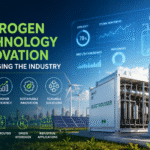

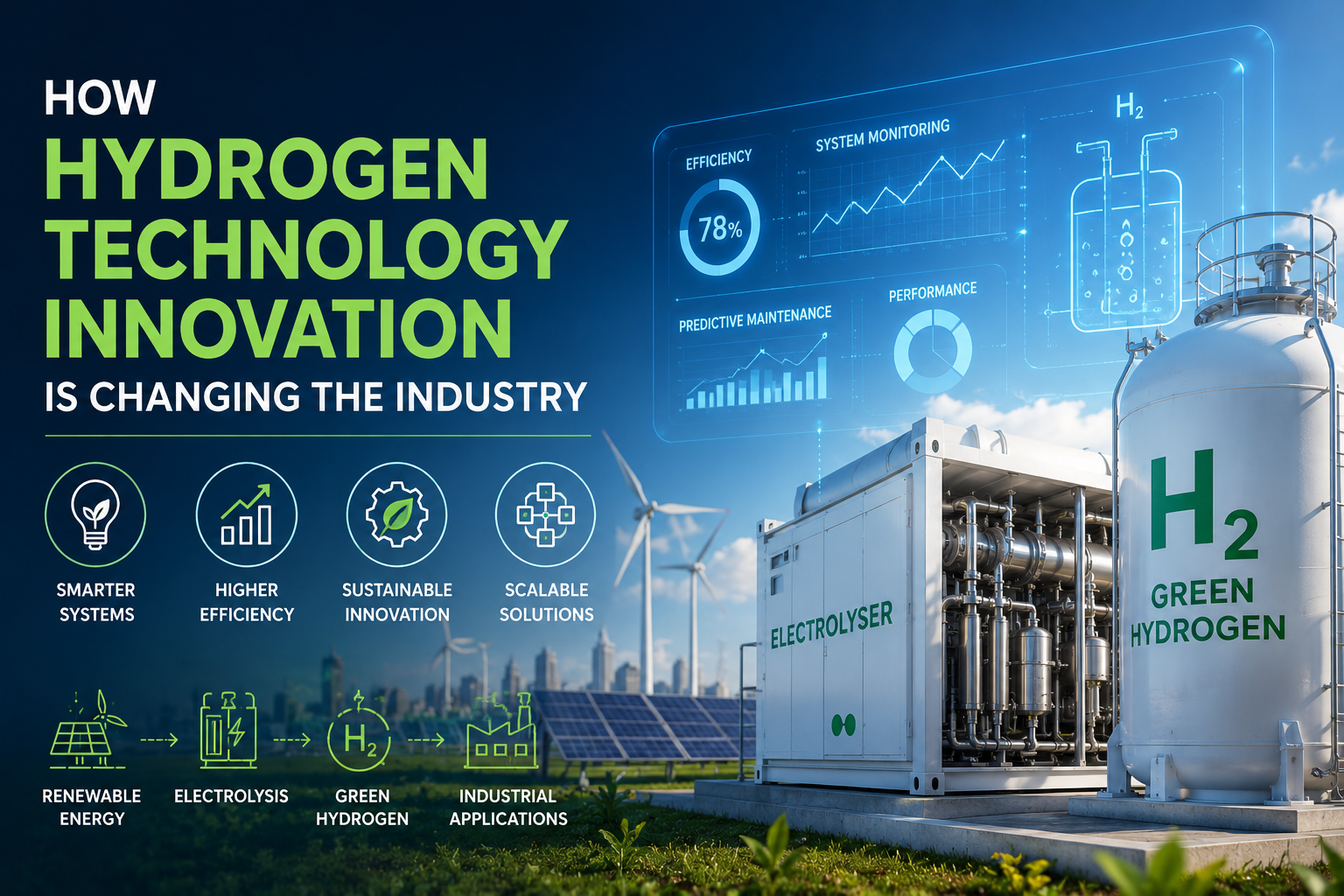
Hydrogen technology innovation is changing how green hydrogen is produced, managed, and scaled. Modern electrolysers are becoming smarter, more efficient, and better suited to work with renewable energy.
The industry is no longer focused only on building larger hydrogen plants. Today, innovation also involves better control systems, digital monitoring, predictive maintenance, improved materials, and modular designs.
These changes could help solve some of the main challenges facing green hydrogen production. They may reduce energy use, improve equipment reliability, and make future projects easier to expand.
This article looks at how hydrogen technology innovation is changing the industry and what these developments could mean for businesses planning future hydrogen projects.
How Is Hydrogen Technology Innovation Changing the Industry?
Hydrogen technology innovation is improving how green hydrogen is produced and scaled. New developments include smarter electrolyser controls, digital twins, predictive maintenance, improved materials, modular systems, and better integration with renewable energy. These innovations can improve efficiency, reliability, and long-term project scalability.
Key Takeaways
- Hydrogen technology innovation is making electrolysers smarter and more efficient.
- Digital twins and predictive maintenance can improve equipment reliability.
- New materials may reduce the need for expensive critical minerals.
- Modular systems can help businesses expand hydrogen production in stages.
- Renewable energy integration is becoming an important part of electrolyser design.
- The right technology depends on the project, energy supply, location, and end use.
Smarter Electrolyser Control Systems
One of the most important areas of hydrogen technology innovation is smarter system control.
Solar and wind energy do not produce electricity at a constant level. Solar output changes throughout the day, while wind generation can rise and fall with weather conditions.
Because of this, hydrogen production systems need to respond to changing electricity supplies.
Modern control systems can help operators:
- Adjust hydrogen production based on available electricity
- Monitor energy consumption
- Identify performance losses
- Improve operating efficiency
- Detect possible equipment problems
- Reduce unnecessary downtime
For example, a hydrogen plant connected mainly to solar power may receive high levels of electricity during the day and much less at night. A flexible electrolyser can respond to these changes more effectively.
As a result, the system may make better use of available renewable electricity.
This type of flexibility is becoming increasingly important as more green hydrogen projects are connected directly to solar, wind, and hybrid renewable energy systems.
Digital Twins and Predictive Maintenance in Hydrogen Production
Digital technology is also becoming an important part of hydrogen production.
A digital twin is a virtual model of a physical system. In a hydrogen project, it can help operators study how equipment performs under different operating conditions.
For example, digital systems can track:
- Changes in electricity supply
- Operating temperatures
- Pressure levels
- Hydrogen output
- Energy consumption
- Equipment performance
- Component degradation
This information can help operators make better decisions.
Predictive Maintenance
Traditionally, equipment maintenance may take place after a failure or on a fixed schedule.
Predictive maintenance uses monitoring data to identify possible problems earlier.
This can help operators:
- Plan maintenance before a major failure
- Reduce unexpected downtime
- Improve equipment reliability
- Extend the life of important components
For large hydrogen facilities, even a small improvement in uptime can make a difference.
Therefore, digital monitoring could become an important part of future hydrogen technology innovation, especially as projects move from pilot plants to larger commercial facilities.
Reducing the Use of Critical Materials
Another important area of innovation involves the materials used inside electrolysers.
Some technologies depend on expensive or limited materials. For example, PEM electrolysers traditionally use precious metals such as platinum and iridium in certain components.
These materials can increase equipment costs. They can also create supply chain concerns as global demand for electrolysers grows.
To address this challenge, researchers and manufacturers are working on several approaches:
- Reducing catalyst loading
- Improving catalyst efficiency
- Developing alternative materials
- Increasing component durability
- Improving recycling and material recovery
Reducing the need for critical materials could make advanced hydrogen electrolysers easier to manufacture at scale.
It could also help lower equipment costs over time.
Why AEM Technology Is Gaining Attention
AEM electrolysis is one area receiving growing attention.
The technology aims to reduce dependence on some expensive materials while maintaining good performance and flexibility.
However, durability and large-scale commercial deployment remain important areas for further development.
The progress of technologies such as AEM shows how hydrogen technology innovation is not limited to making systems bigger. It is also focused on improving the materials and components inside those systems.
Modular and Scalable Electrolyser Systems
Large hydrogen projects require significant investment.
For many businesses, building a full-scale facility from the beginning can create financial and operational risk.
Modular electrolyser systems offer another option.
Instead of installing the complete production capacity at once, a company can start with a smaller system and expand later.
A phased approach may include:
- Starting with a pilot or small commercial project
- Testing production and system performance
- Securing additional renewable electricity
- Building demand and customer agreements
- Adding electrolyser capacity in stages
This approach can reduce some of the risks linked to large hydrogen projects.
It also gives businesses time to gain operational experience before making a larger investment.
Planning for Future Growth
Future expansion should be considered during the first stage of project planning.
For example, businesses should consider:
- Available land
- Electrical connections
- Water supply
- Hydrogen storage
- Future equipment space
- Transport infrastructure
Planning ahead can make future expansion easier and potentially reduce costs.
Benefits of Hydrogen Technology Innovation
Hydrogen technology innovation is improving both the technical performance and business potential of green hydrogen projects.
1. Higher Energy Efficiency
Electrolyser efficiency is important because electricity is one of the largest costs in green hydrogen production.
New technologies aim to reduce the amount of electricity needed to produce hydrogen.
Even small efficiency improvements can become important at industrial scale.
For this reason, businesses should look beyond the purchase price of an electrolyser and consider its long-term energy performance.
2. Better Renewable Energy Integration
Modern electrolysers are becoming better at working with changing renewable electricity.
This is useful for projects powered by:
- Solar energy
- Wind energy
- Hybrid renewable systems
- Renewable electricity from the grid
Some technologies can respond quickly when electricity availability changes.
As a result, hydrogen producers may be able to use more renewable power and reduce dependence on fossil fuel-based electricity.
This is an important step because the success of green hydrogen depends not only on the electrolyser itself but also on how well it works with the available energy supply.
3. Increased Industrial Hydrogen Production
As electrolysers become larger and more efficient, they may support industries that need significant volumes of hydrogen.
Potential applications include:
- Steel production
- Chemical manufacturing
- Fertiliser production
- Oil refining
- Green ammonia production
- Shipping fuels
- Heavy transportation
These sectors can be difficult to decarbonise through direct electrification alone. Therefore, hydrogen for industry may play an important role in reducing emissions from certain industrial processes.
4. Lower Long-Term Operating Costs
The cheapest electrolyser is not always the most economical choice.
Businesses should consider the total cost of ownership, including:
- Initial equipment cost
- Electricity consumption
- Maintenance requirements
- Replacement parts
- System efficiency
- Equipment lifespan
- Hydrogen output
A system with a higher initial cost may still provide better long-term value if it uses less electricity or requires less maintenance.
Therefore, equipment selection should be based on complete project economics rather than purchase price alone.
5. Easier Scalability
Modular systems can make it easier to increase hydrogen production as demand grows.
This may be useful for businesses that want to begin with a smaller project.
A project could develop through stages:
Pilot Project → Commercial Project → Large-Scale Hydrogen Production
This approach allows companies to learn from real operations before expanding.
It can also help align future investment with actual hydrogen demand.
Challenges Still Facing Hydrogen Technology Innovation
Despite major progress, several challenges remain.
High Capital Costs
Electrolysers are only one part of a complete hydrogen production project.
A large facility may also need:
- Renewable electricity infrastructure
- Water treatment
- Hydrogen purification
- Compression equipment
- Storage systems
- Transport infrastructure
As a result, the total investment can be substantial.
Reducing the cost of the full hydrogen value chain will remain important for wider commercial adoption.
The Cost of Renewable Electricity
Renewable electricity has a major effect on the final cost of green hydrogen.
Even a highly efficient electrolyser may produce expensive hydrogen if electricity costs are high.
Successful projects often consider locations with:
- Strong solar resources
- Good wind potential
- Affordable renewable electricity
- Reliable grid infrastructure
- Access to industrial customers
This is why project location can be just as important as electrolyser technology.
Water Supply and Water Treatment
Electrolysers need water.
Therefore, large hydrogen projects must consider both water availability and water quality.
Depending on the technology and project design, water may need treatment before it enters the system.
Businesses should evaluate:
- Local water availability
- Water quality
- Treatment requirements
- Environmental impact
- Long-term water security
For projects in water-stressed regions, these factors should be considered early in the planning process.
Equipment Durability
Electrolysers operate under demanding conditions.
Important components can degrade over time.
Durability is especially important for systems exposed to:
- Frequent start and stop cycles
- Variable electricity input
- High temperatures
- High operating pressure
Improving the life of membranes, catalysts, and other components remains a key area of hydrogen technology innovation.
Better durability can reduce maintenance needs and improve long-term project economics.
Practical Recommendations for Businesses
Choosing an electrolyser is not only about efficiency.
The best option depends on the hydrogen end use, available energy, location, infrastructure, and future plans.
1. Start With the End Use of Hydrogen
First, define how the hydrogen will be used.
For example:
- Continuous industrial production may need a different system from a flexible renewable energy project.
- Hydrogen refuelling may require fast response and high hydrogen purity.
- Industrial facilities with access to waste heat may benefit from high-temperature electrolysis.
The end use should guide the technology selection process.
2. Evaluate Renewable Energy Availability
Before investing, study the available energy supply.
Important factors include:
- Solar generation potential
- Wind resources
- Grid access
- Electricity prices
- Seasonal changes
- Energy storage options
A technology that works well with stable electricity may not be the best choice for a project powered by highly variable renewable energy.
Therefore, the energy profile should be reviewed before selecting equipment.
3. Plan for Future Expansion
Hydrogen demand may grow as more industries look for lower-carbon energy solutions.
Businesses should ask whether the chosen system can expand without a major redesign.
Important questions include:
- Is additional land available?
- Can electrical infrastructure expand?
- Is future water supply available?
- Can storage capacity increase?
- Can new electrolyser modules be added?
Planning for growth from the beginning can reduce future costs and delays.
4. Look Beyond Initial Equipment Cost
When comparing technologies, businesses should evaluate long-term performance.
Key questions include:
- How much electricity will the system use?
- What maintenance is required?
- How long will important components last?
- What hydrogen output is expected?
- Can the system expand easily?
- What technical support is available?
A full lifecycle analysis can provide a more realistic view of project costs.
5. Consider the Complete Hydrogen Infrastructure
Producing hydrogen is only one part of the project.
The hydrogen must also be stored, transported, delivered, or used on-site.
Businesses should plan for:
- Hydrogen compression
- Storage
- Distribution
- Pipeline connections
- Transport systems
- End-user requirements
A high-performing electrolyser alone cannot guarantee a successful project.
The complete hydrogen value chain must work together.
The Future of Hydrogen Technology Innovation
The future of hydrogen technology innovation will depend on continued improvements in efficiency, cost, durability, and manufacturing capacity.
Several developments are likely to shape the industry:
- Larger electrolyser manufacturing facilities
- Lower equipment costs through scale
- More efficient catalyst materials
- Reduced use of critical minerals
- AI-based performance monitoring
- Digital twins
- Predictive maintenance
- Better renewable energy integration
- Modular hydrogen plants
The future is unlikely to depend on only one electrolyser technology.
Instead, different technologies may serve different applications.
Alkaline Electrolysers
Alkaline electrolysers are likely to remain important for large-scale projects, especially where electricity supply is relatively stable and cost is a major consideration.
PEM Electrolysers
PEM electrolysers are well suited to projects that need flexible operation and close integration with variable renewable energy.
AEM Electrolysers
AEM technology could become more important as manufacturers improve durability, performance, and commercial scalability.
SOEC Technology
SOEC systems may offer strong opportunities for industries that have access to high-temperature heat or waste heat.
The most successful projects will likely match the right technology with the right energy source, location, infrastructure, and hydrogen end use.
For a detailed look at the main electrolyser technologies, including alkaline, PEM, AEM, and SOEC systems, explore our guide to next-generation electrolyser technologies driving green hydrogen production.
Frequently Asked Questions
How is hydrogen technology innovation improving green hydrogen production?
Hydrogen technology innovation is improving electrolyser efficiency, flexibility, durability, and system monitoring. It is also supporting better integration with renewable energy and larger-scale hydrogen projects.
What is a digital twin in hydrogen production?
A digital twin is a virtual model of a physical system. It can help operators monitor performance, study operating conditions, and identify possible problems before they affect production.
How can predictive maintenance help hydrogen projects?
Predictive maintenance uses operational data to identify early signs of equipment problems. This can help reduce unexpected downtime and improve equipment reliability.
Why is reducing critical material use important?
Some electrolyser technologies depend on expensive materials. Reducing the use of these materials could lower equipment costs, reduce supply chain risks, and support larger-scale manufacturing.
Why are modular electrolyser systems useful?
Modular systems allow businesses to start with a smaller project and increase capacity later. This can reduce upfront investment and make future expansion easier.
Can hydrogen technology innovation lower the cost of green hydrogen?
It can help lower costs through better efficiency, improved durability, larger manufacturing scale, smarter operation, and reduced material use. However, renewable electricity costs will remain a major factor.
What should a business consider before investing in an electrolyser?
Businesses should consider hydrogen demand, electricity availability, project location, water supply, infrastructure, technology maturity, maintenance needs, and future expansion plans.
Conclusion: How Hydrogen Technology Innovation Is Changing the Industry
Hydrogen technology innovation is helping transform green hydrogen from a developing energy solution into a more advanced and scalable industrial technology.
Modern electrolysers are becoming smarter, more efficient, and easier to integrate with renewable energy. Digital twins, predictive maintenance, improved materials, and modular designs are also creating new opportunities for hydrogen projects.
However, technology alone will not determine project success.
Businesses must also consider renewable electricity, water supply, infrastructure, hydrogen demand, operating costs, and long-term growth plans.
As hydrogen technology innovation continues to improve, electrolysers are expected to play an increasingly important role in expanding green hydrogen production and supporting cleaner industrial energy systems.
To understand the broader topic, naturally link to:
- What Is Green Hydrogen? A Simple Explainer
- How Green Hydrogen Production Works: A Step-by-Step Guide
- Next-Generation Electrolyser Technologies Driving Green Hydrogen Production
- The Role of Green Hydrogen in Decarbonizing Heavy Industry