
Hydrogen energy storage is becoming one of the most important technologies in the global clean energy transition. As countries accelerate the adoption of solar and wind power, they also need reliable ways to store excess renewable electricity and deliver it when demand rises. Green hydrogen provides a long-duration energy storage solution that helps balance electricity supply, improve grid resilience, and support the expansion of renewable grid solutions worldwide.
The Growing Need for Hydrogen Energy Storage
Renewable energy generation does not always align with electricity demand. Solar power reaches peak production during daylight hours, while wind energy output can fluctuate depending on weather conditions and seasonal patterns.
This mismatch creates a significant challenge for power grids. Without sufficient storage capacity, surplus renewable electricity may be curtailed or wasted, reducing the efficiency and economic value of renewable energy projects.
As nations pursue ambitious decarbonization goals, interest in hydrogen energy storage continues to grow because it offers a scalable and flexible method of storing clean energy for extended periods.
How Hydrogen Energy Storage Works
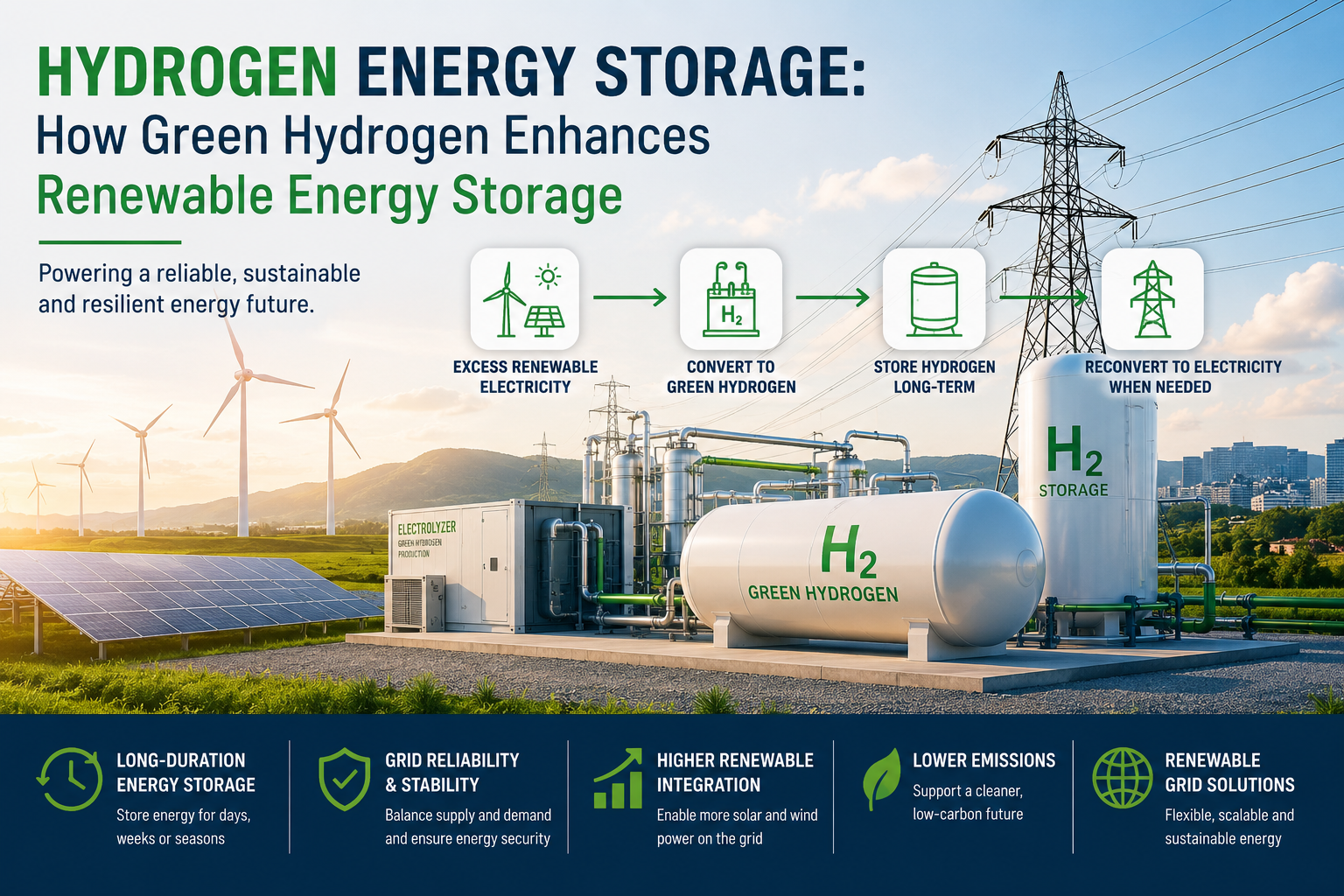
Hydrogen energy storage uses surplus renewable electricity to power an electrolyzer, which splits water into hydrogen and oxygen. The hydrogen produced through this process is known as green hydrogen because it is generated using renewable energy sources rather than fossil fuels.
The stored hydrogen can then be:
- Converted back into electricity using fuel cells or gas turbines
- Used directly in industrial applications
- Supplied as fuel for transportation
- Stored for weeks, months, or even seasons with minimal energy loss
This ability to preserve renewable electricity for long durations makes hydrogen energy storage a vital component of future low-carbon energy systems.
Hydrogen Energy Storage for Long-Term Renewable Electricity Storage
One of the biggest advantages of hydrogen is its capability to provide long-duration and seasonal energy storage.
Traditional batteries are highly effective for short-duration applications, such as balancing hourly fluctuations in electricity demand. However, they become less economical when energy needs to be stored for weeks or months.
By contrast, hydrogen energy storage can:
- Store large amounts of renewable energy over long periods
- Reduce renewable energy curtailment
- Improve energy security
- Support seasonal balancing of electricity supply and demand
- Provide backup power during periods of low renewable generation
This long-duration capability makes hydrogen an ideal complement to battery storage technologies.
Hydrogen Energy Storage and Renewable Grid Solutions
As renewable energy penetration increases, power systems require greater flexibility to maintain reliability and stability.
Hydrogen energy storage supports renewable grid solutions in several important ways.
Managing Peak Electricity Demand
Stored hydrogen can be converted back into electricity during periods of high demand, helping utilities meet peak loads without relying heavily on fossil-fuel-based power generation.
Improving Grid Reliability
Hydrogen storage systems can provide backup power when renewable generation drops unexpectedly due to changing weather conditions or sudden demand spikes.
Reducing Renewable Energy Curtailment
Instead of wasting excess renewable electricity, grid operators can convert surplus power into hydrogen and store it for future use.
Supporting Seasonal Energy Storage
Hydrogen can preserve renewable energy across seasons, allowing excess summer solar generation to be used during winter periods when energy demand is higher.
These capabilities make hydrogen one of the most promising renewable grid solutions for achieving a resilient and low-carbon electricity system.
Hydrogen Energy Storage Enables Higher Renewable Energy Integration
Without large-scale and long-duration storage technologies, integrating greater amounts of renewable energy into the grid becomes increasingly difficult.
Hydrogen energy storage enables power systems to incorporate more:
- Solar energy
- Wind energy
- Offshore renewable generation
- Distributed energy resources
By acting as an energy bridge between generation and consumption, hydrogen helps grids accommodate higher levels of renewable electricity while maintaining reliability and flexibility.
Hydrogen Energy Storage Creates a More Connected Energy System
Green hydrogen offers benefits beyond electricity storage. It can connect multiple sectors of the economy and create an integrated energy ecosystem.
Stored hydrogen can support:
- Industrial heating processes
- Steel and chemical manufacturing
- Heavy-duty transportation
- Shipping and aviation fuels
- Building heating applications
This cross-sector integration creates additional value for renewable electricity and strengthens the business case for investing in hydrogen infrastructure.
The Future of Hydrogen Energy Storage and Renewable Grid Solutions
The global energy transition requires technologies capable of delivering flexibility, resilience, and long-term energy storage.
Green hydrogen addresses these challenges by transforming excess renewable electricity into a clean fuel that can be stored and deployed whenever it is needed. As electrolyzer technologies improve and renewable energy costs continue to decline, hydrogen energy storage will play an increasingly important role in enabling reliable renewable grid solutions.
Countries and businesses investing in green hydrogen today are building the infrastructure necessary for a low-carbon, energy-secure future.
At Green Hydrogen Global, we are committed to advancing innovative hydrogen technologies that help industries and communities unlock the full potential of renewable energy and accelerate the transition to a sustainable energy economy.
Frequently Asked Questions
Why is hydrogen energy storage important?
Hydrogen energy storage enables renewable electricity to be stored for long periods and used when demand increases, helping improve grid reliability and energy security.
How does hydrogen energy storage work?
Excess renewable electricity powers an electrolyzer that splits water into hydrogen and oxygen. The hydrogen is then stored and later used as fuel or converted back into electricity.
Is hydrogen better than batteries for energy storage?
Hydrogen and batteries serve different purposes. Batteries are ideal for short-term storage, while hydrogen is better suited for long-duration and seasonal energy storage applications.
How does hydrogen support renewable grid solutions?
Hydrogen improves grid flexibility by storing surplus renewable electricity, reducing curtailment, providing backup power, and balancing energy supply and demand.