
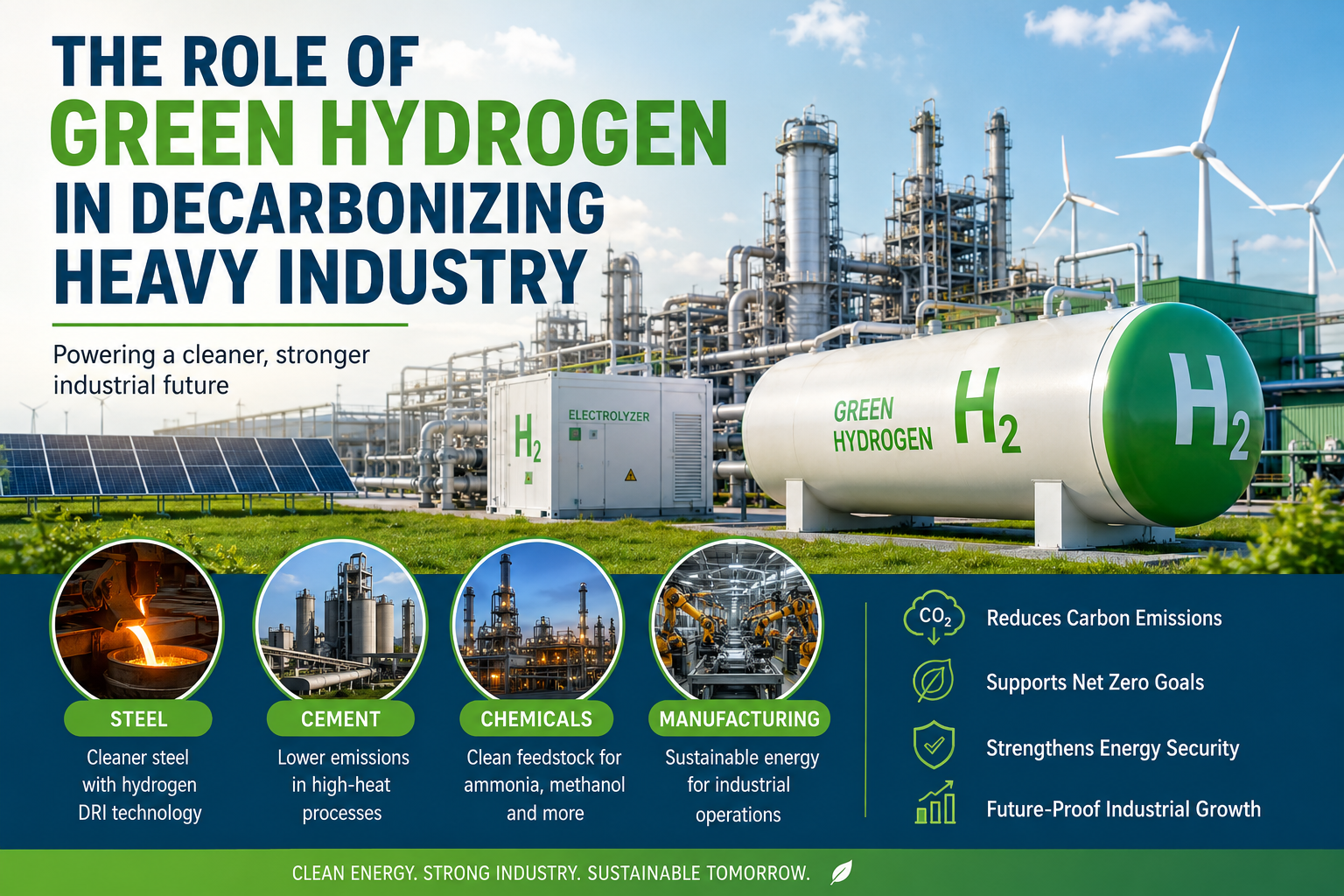
Green hydrogen can replace fossil fuels in multiple industrial processes. Instead of burning coal or natural gas, industries can use hydrogen as a clean fuel source.
1. Hydrogen for Steel Production
Traditional steelmaking relies heavily on coal-based blast furnaces. These generate massive CO₂ emissions.
Green hydrogen offers a cleaner alternative through a process called Direct Reduced Iron (DRI).
How It Helps
- Hydrogen replaces coal during iron reduction
- Produces water vapor instead of CO₂
- Significantly lowers carbon emissions
Industry Insight
Many steel manufacturers are already testing hydrogen-powered steel plants. From industry observations, this sector may become one of the largest future users of green hydrogen.
2. Decarbonization in Cement Manufacturing
Cement production is difficult to decarbonize because emissions come from both fuel combustion and chemical reactions.
Green hydrogen can help by:
- Replacing coal-fired heating systems
- Supporting cleaner kiln operations
- Reducing fossil fuel dependence
While hydrogen alone may not eliminate all cement emissions, it can substantially reduce operational carbon output.
3. Hydrogen in Chemical Manufacturing
Chemical industries already use hydrogen extensively, but most of it comes from fossil fuels.
Green hydrogen allows manufacturers to produce:
- Ammonia
- Methanol
- Fertilizers
- Synthetic fuels
without high carbon emissions.
Practical Observation
Many chemical facilities can transition faster because they already understand hydrogen handling and infrastructure requirements.
4. Clean Hydrogen for Industrial Heating
Industrial heating systems are major emission sources across manufacturing sectors.
Green hydrogen can provide:
- High-temperature heat
- Stable energy supply
- Cleaner combustion
Industries such as:
- Glass manufacturing
- Ceramics
- Food processing
- Heavy machinery production
can all benefit from hydrogen-powered heat systems.
Benefits of Hydrogen for Industry
The growing focus on decarbonization with hydrogen is driven by several long-term advantages.
Reduced Carbon Emissions
Green hydrogen helps industries significantly lower greenhouse gas emissions while maintaining productivity.
Energy Security
Hydrogen can be produced locally using renewable energy, reducing dependence on imported fossil fuels.
Renewable Energy Storage
Hydrogen acts as long-duration energy storage, helping stabilize renewable-heavy energy systems.
Future Regulatory Compliance
Many governments are introducing stricter climate regulations. Businesses adopting hydrogen early may gain a competitive advantage.
Strong ESG Positioning
Investors and customers increasingly prefer companies committed to sustainability and clean energy adoption.
Challenges of Industrial Hydrogen Adoption
Although the future looks promising, there are still challenges industries must address.
High Initial Costs
Green hydrogen production and infrastructure require significant investment.
Limited Infrastructure
Many regions still lack:
- Hydrogen pipelines
- Refueling systems
- Storage facilities
Renewable Energy Demand
Large-scale hydrogen production requires massive renewable electricity generation.
Equipment Transition
Industrial systems may need upgrades or redesigns to safely use hydrogen.
Real-World Recommendation
From practical industry experience, companies that begin with pilot projects often achieve smoother long-term hydrogen integration.
Real-World Applications of Green Hydrogen
Several industries and countries are already investing heavily in hydrogen-based systems.
Examples Include:
- Hydrogen-powered steel plants in Europe
- Green ammonia projects in the Middle East
- Renewable hydrogen hubs in Australia
- Industrial hydrogen corridors in Asia
These projects show that industrial hydrogen adoption is no longer theoretical. It is already happening at commercial scale.
Why Businesses Are Investing in Decarbonization With Hydrogen
Businesses are increasingly exploring hydrogen not only for sustainability but also for long-term economic and strategic reasons.
Key Business Drivers
1. Net-Zero Goals
Many companies must reduce emissions to meet investor and regulatory expectations.
2. Future Market Positioning
Businesses adopting clean technologies early often gain stronger market credibility.
3. Operational Stability
Renewable hydrogen can reduce long-term exposure to fossil fuel price volatility.
4. Export Opportunities
Hydrogen-related industries are expected to create new global trade markets.
Future of Hydrogen for Industry
The future of industrial hydrogen looks strong as technology improves and costs continue falling.
Key Trends to Watch
- More affordable electrolysers
- Expansion of renewable energy
- Government hydrogen incentives
- Industrial hydrogen partnerships
- Growth of hydrogen infrastructure
Industry experts expect hydrogen demand to increase significantly over the next decade, especially in sectors where direct electrification is difficult.
Quick Comparison: Fossil Fuels vs Green Hydrogen
| Factor | Fossil Fuels | Green Hydrogen |
|---|---|---|
| Carbon Emissions | High | Near Zero |
| Sustainability | Limited | Renewable |
| Energy Source | Coal/Gas/Oil | Solar/Wind/Hydro |
| Long-Term Viability | Declining | Growing |
| ESG Alignment | Weak | Strong |
FAQs
1. Why is hydrogen important for heavy industry?
Hydrogen provides clean, high-temperature energy that helps reduce emissions in industries where electrification is difficult.
2. How does green hydrogen reduce industrial emissions?
Green hydrogen replaces fossil fuels in industrial processes, producing water vapor instead of carbon dioxide.
3. Which industries can benefit most from green hydrogen?
Steel, cement, chemicals, refining, transportation, and manufacturing industries can benefit significantly.
4. Is green hydrogen commercially viable today?
Green hydrogen is growing rapidly, although large-scale adoption still depends on infrastructure and cost improvements.
5. Can hydrogen completely replace fossil fuels in industry?
Not entirely yet, but it can dramatically reduce emissions in many industrial applications.
6. What is the biggest challenge for hydrogen adoption?
The biggest challenges include infrastructure costs, renewable energy supply, and storage systems.
7. Why are governments supporting hydrogen projects?
Hydrogen helps countries reduce emissions, improve energy security, and support clean industrial growth.
Conclusion
The transition toward cleaner industrial systems is no longer optional. Heavy industries must reduce emissions while maintaining productivity, and this is where hydrogen for industry plays a major role.
Through decarbonization with hydrogen, businesses can lower emissions, improve sustainability, and prepare for the future energy economy. While challenges still exist, the progress happening across steel, cement, chemicals, and manufacturing sectors clearly shows that green hydrogen is becoming a serious industrial solution.
At Green Hydrogen Global, we believe the industries that begin exploring hydrogen today will be better positioned for tomorrow’s energy landscape. Whether through pilot projects, renewable integration, or full-scale hydrogen systems, the journey toward industrial decarbonization has already begun.