
Introduction
As the world moves toward cleaner energy, green hydrogen production is becoming one of the most talked-about solutions. But how does it actually work?
Green hydrogen production is the process of creating hydrogen using renewable energy through hydrogen electrolysis, producing zero carbon emissions.
If you’ve ever explored renewable energy systems or visited a modern hydrogen facility, you’ll notice that the process is both simple in concept and advanced in execution. At its core, green hydrogen production uses renewable electricity and water to create a clean fuel with zero emissions.
In this guide, we explain green hydrogen production and hydrogen electrolysis, step-by-step way so you can understand how it all connects.
What Is Green Hydrogen Production and How It Works?
Green hydrogen production is the process of generating hydrogen fuel using renewable energy sources like:
- Solar power
- Wind energy
- Hydropower
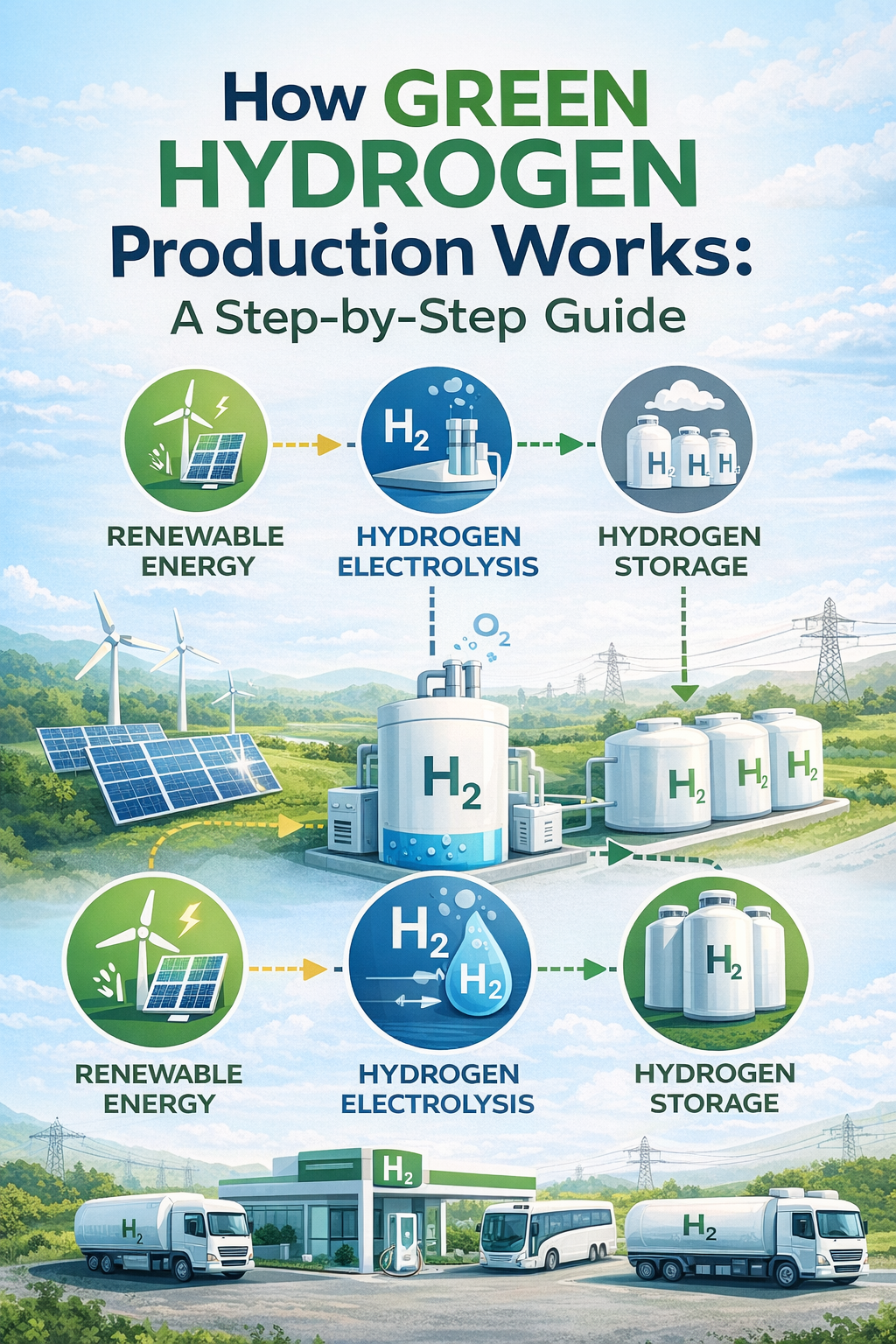
This electricity is used to split water into hydrogen and oxygen through hydrogen electrolysis – a clean and efficient method that produces no carbon emissions. Green hydrogen is mainly produced using electrolysis, where renewable electricity splits water into hydrogen and oxygen.
👉 Unlike grey or blue hydrogen, this process is fully sustainable and aligns with global climate goals.
Step-by-Step Green Hydrogen Production Process
Let’s walk through how green hydrogen is produced in real-world systems.
Step 1: Renewable Energy Generation
Everything starts with clean energy.
Hydrogen plants are usually connected to renewable sources such as:
- Solar farms
- Wind turbines
- Hybrid renewable systems
💡 Practical insight:
From what I’ve seen in modern setups, many projects combine solar and wind together. This ensures continuous energy supply even when one source is not available.
Step 2: Water Supply and Treatment
Water is the raw material for hydrogen.
Before entering the system, water must be:
- Filtered
- Purified
- Deionized
This ensures the electrolysis process runs efficiently and protects equipment from damage.
💡 Experience-based tip:
In real projects, water quality is often underestimated. Poor water treatment can reduce efficiency and increase maintenance costs.
Step 3: Hydrogen Electrolysis Process
In real-world hydrogen plants, electrolysers use electricity to break water molecules into hydrogen and oxygen, making it a clean and emission-free process when powered by renewables. This is the core of green hydrogen production.
What is Hydrogen Electrolysis?
It is a process where electricity is used to split water (H₂O) into:
- Hydrogen (H₂)
- Oxygen (O₂)
How it works:
- Electricity passes through water inside an electrolyser
- Water molecules break apart
- Hydrogen is collected as fuel
- Oxygen is released or reused
Types of Electrolysers Used
There are three main technologies used in hydrogen electrolysis:
1. Alkaline Electrolysers
- Most mature technology
- Lower cost
- Suitable for large-scale projects
2. PEM (Proton Exchange Membrane) Electrolysers
- More flexible and efficient
- Works well with variable renewable energy
- Higher cost but growing rapidly
3. Solid Oxide Electrolysers
- High efficiency
- Still developing
- Used in advanced industrial applications
💡 Real-world observation:
Most new projects I’ve come across prefer PEM electrolysers because they adapt better to fluctuating renewable energy.
Step 4: Hydrogen Separation and Purification
Once hydrogen is produced, it is:
- Separated from oxygen
- Purified to meet industry standards
This step ensures the hydrogen can be used safely in:
- Industrial processes
- Fuel cells
- Energy systems
Step 5: Hydrogen Storage
Hydrogen needs to be stored for later use.
Common storage methods:
- Compressed gas tanks
- Liquid hydrogen storage
- Underground storage (for large scale)
💡 Practical tip:
Storage is one of the most challenging parts of green hydrogen production due to hydrogen’s low density.
Step 6: Transportation and Distribution
After storage, hydrogen is transported to where it is needed.
Transport options:
- Pipelines
- Tanker trucks
- Shipping (for export markets)
This step is crucial for building a global hydrogen economy.
Step 7: End Use Applications
Green hydrogen can be used in many sectors:
- Heavy industry (steel, cement, chemicals)
- Transportation (trucks, ships, trains)
- Power generation
- Energy storage
👉 This flexibility is what makes green hydrogen so valuable.
Why Green Hydrogen Production Is Important
Green hydrogen solves problems that other clean energy solutions cannot.
Key benefits:
- Zero carbon emissions
- Long-term energy storage
- Supports renewable energy integration
- Reduces dependence on fossil fuels
💡 Insight:
From an industry perspective, green hydrogen is not replacing electricity – it is complementing it.
Why Businesses Are Investing in Green Hydrogen Production
- Helps meet net-zero and ESG targets
- Reduces long-term energy risk
- Supports energy independence
- Enables future hydrogen market participation
Challenges in Green Hydrogen Production
While promising, there are still challenges:
- High initial costs
- Need for large renewable energy supply
- Infrastructure limitations
- Storage and transport complexity
👉 However, costs are falling quickly as technology improves.
Best Practices for Green Hydrogen Projects
If you’re planning or exploring green hydrogen production, here are some practical recommendations:
1. Combine Renewable Sources
Use both solar and wind for consistent power supply.
2. Focus on Water Quality
Invest in proper water treatment systems early.
3. Choose the Right Electrolyser
Select technology based on your energy input and scale.
4. Plan Storage Early
Storage solutions should be part of the initial design.
5. Think Long-Term
Design systems that can scale as demand grows.
Quick Summary of Green Hydrogen Production
- Uses renewable energy like solar and wind
- Requires purified water
- Uses hydrogen electrolysis
- Produces zero emissions
- Supports industry and transport
FAQs
1. What is green hydrogen production in simple terms?
It is the process of producing hydrogen using renewable energy and water through electrolysis, without carbon emissions.
2. How does hydrogen electrolysis work?
Hydrogen electrolysis uses electricity to split water into hydrogen and oxygen inside an electrolyser.
3. Why is green hydrogen better than other types?
Because it produces zero emissions and uses renewable energy instead of fossil fuels.
4. What are the main uses of green hydrogen?
It is used in industry, transportation, energy storage and power generation.
5. Is green hydrogen expensive?
Currently yes, but costs are decreasing as technology improves and adoption increases.
6. Can green hydrogen replace fossil fuels completely?
Not completely, but it plays a major role in reducing emissions in hard-to-decarbonize sectors.
7. What is the biggest challenge in green hydrogen production?
The biggest challenge is cost and infrastructure development.
Conclusion
Green hydrogen production is a powerful step toward a cleaner energy future. By combining renewable energy, water and advanced hydrogen electrolysis, we can produce a fuel that is both sustainable and versatile.
From what I’ve seen across the industry, the shift toward green hydrogen is not just a trend – it’s a long-term transformation. Businesses that start early will have a strong advantage as the hydrogen economy grows.
If you’re exploring clean energy solutions, understanding how green hydrogen production works is the first step toward making smarter, future-ready decisions.